Laguna Seca
Best Braking Points at Laguna Seca: Complete Guide
Stop guessing where to brake. A turn-by-turn detailed guide for braking references at Laguna Seca.
Monterey Local
Stop guessing where to brake. A turn-by-turn detailed guide for braking references at Laguna Seca.
Braking decisions shape corner entry. Not because braking harder is automatically faster, but because where and how you release the brake determine how you enter the corner.
Here are the key braking references for Laguna Seca. Note: These are for a GT car (Porsche GT3/GT4) on R-compound tires. Adjust earlier for street tires.
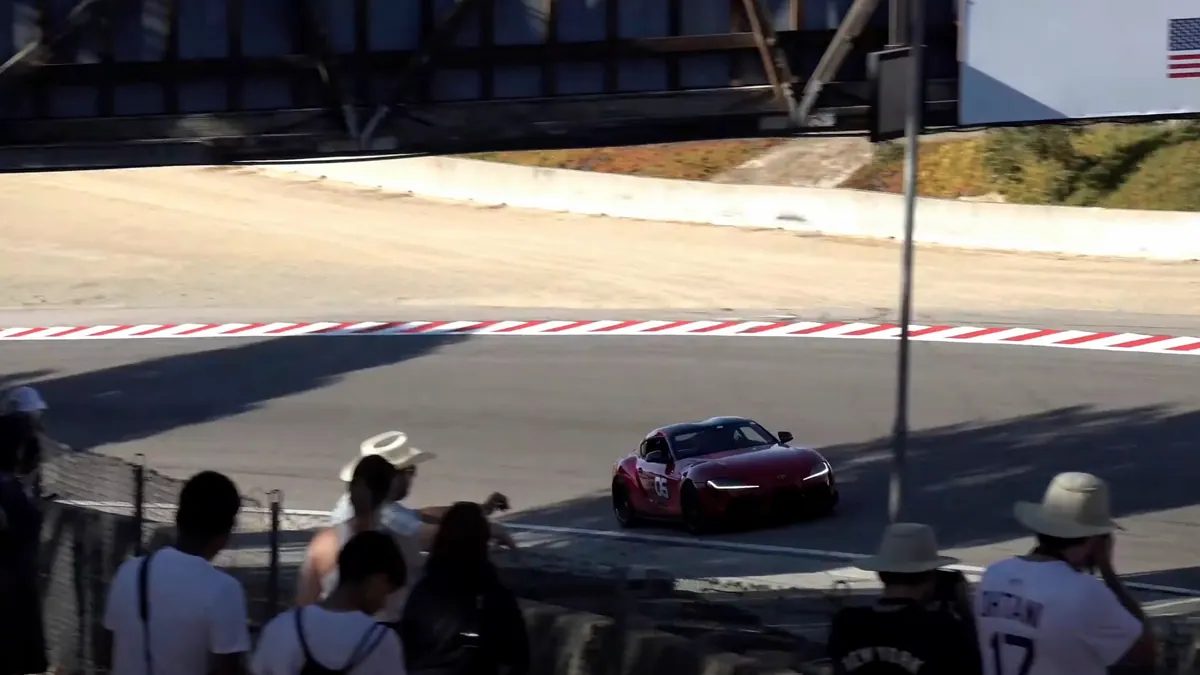
Reference: The ‘3’ marker on the bridge vs. the access road on the right. Technique: Brake in a straight line towards the outside curb. You must shed 60+ mph here. Danger: It’s downhill. It’s easy to lock up the front tires.
Reference: The shadows from the bridge (variable) or the start of the curb on the left. Technique: Short, hard brake. You want to carry speed up the hill.
Reference: Look for the specific oak tree on the left as you approach the crest. Technique: Build pressure while the car is supported uphill, then release progressively before the crest. Exact pressure and timing depend on the car, tire, conditions, and driver.
Reference: The start of the white line on the right, or the ‘2’ marker. Technique: This is the slowest corner on the track. Patience is key. Brake hard, rotate, and get the car pointed for the long front straight.
Don’t use these markers as “braking points.” Use them as “reference points.” Start braking early and gently creep your braking point forward lap by lap. Data helps verify this. Remote Data Review can show you exactly where you’re braking vs. where the pros brake.